

Quick Answer
How do you prevent salt spray corrosion on security mesh doors?
You prevent salt-spray corrosion by choosing marine-grade 316 stainless steel mesh with a powder-coated frame and rinsing the screen with fresh water periodically. Grade 316 stainless resists the chloride corrosion that pits lower-grade metals near the coast, and quality coatings protect the frame. Security Screen Doors installs corrosion-resistant 316 stainless steel security screens for Southern California coastal homes, so doors stay strong and good-looking despite constant salt-air exposure.
For homes located near the coast, protecting outdoor security products from the effects of salt air is an important part of long-term maintenance. Ocean environments provide fresh air and beautiful views, but they also expose metal surfaces to salt spray, humidity, and moisture that can accelerate corrosion.
Security mesh doors are designed to provide strength, ventilation, and protection, but like any exterior product, they require the right materials and care to maintain their performance over time.
Preventing salt spray corrosion starts with choosing corrosion-resistant materials, using proper installation methods, and following regular maintenance practices. With the right approach, homeowners can help extend the lifespan of their security mesh doors while keeping them looking and functioning their best.
Security Screen Doors provides durable security screen solutions designed for residential properties, helping homeowners improve protection while maintaining airflow, visibility, and long-term performance.
Why Salt Spray Causes Corrosion on Mesh Doors
Salt spray corrosion occurs when airborne salt particles settle on metal surfaces and react with moisture in the environment. Coastal homes are especially vulnerable because salt particles can travel through the air and collect on outdoor materials, including door frames, hinges, mesh panels, and locking hardware.
The corrosion process happens because salt increases the ability of water to conduct electricity, accelerating the breakdown of metal surfaces. Over time, untreated or unsuitable materials may develop discoloration, surface corrosion, weakening, or damage to protective coatings.
According to the National Association of Corrosion Engineers (NACE), corrosion prevention involves selecting appropriate materials, applying protective coatings, and following maintenance practices that reduce exposure-related damage.
For homeowners near coastal areas, these considerations are especially important when selecting security products that are exposed to outdoor conditions every day.
Choosing Corrosion-Resistant Materials
The first step in preventing salt spray damage is selecting materials designed to handle challenging environments.
Not all security mesh doors are manufactured the same way. The quality of the mesh, frame, coatings, fasteners, and hardware can significantly influence how well the product performs in coastal conditions.
Stainless Steel Mesh
Stainless steel mesh is a popular choice for security screens because of its strength and corrosion resistance. The material contains chromium, which helps create a protective layer that improves resistance against rust and environmental exposure.
High-quality stainless steel mesh can perform well in coastal homes when combined with proper framing and maintenance.
Protective Coatings and Finishes
Many security screen systems use protective finishes designed to add another layer of defense against weather exposure.
A durable coating helps reduce direct contact between the metal surface and environmental contaminants such as salt particles and moisture.
However, coatings still require proper care. Even high-quality finishes can deteriorate if salt buildup is allowed to remain on the surface for extended periods.
Regular Cleaning Helps Prevent Salt Buildup
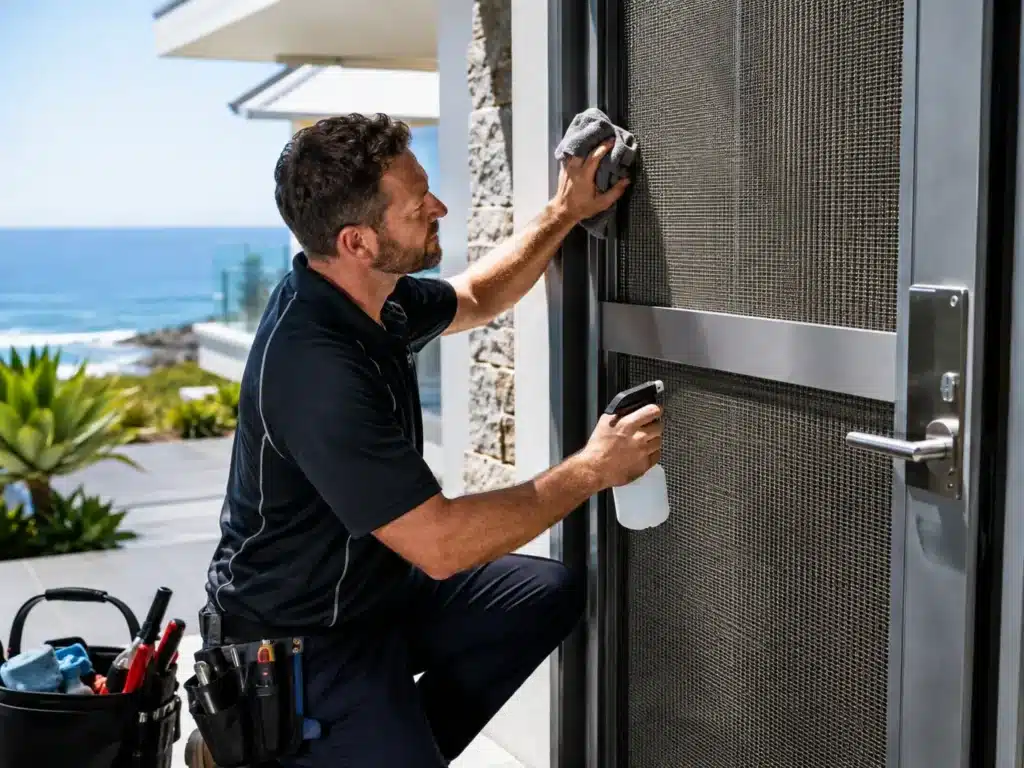
One of the simplest and most effective ways to protect mesh security doors near the coast is regular cleaning.
Salt residue may not always be visible immediately, but it can accumulate over time. Regular washing helps remove these deposits before they contribute to corrosion.
For most coastal homes, cleaning security mesh doors with fresh water and a mild cleaning solution is recommended. Harsh chemicals, abrasive materials, or aggressive scrubbing should be avoided because they may damage protective coatings.
A consistent cleaning routine is especially important after periods of strong winds, storms, or high humidity when salt exposure may increase.
Preventative maintenance is usually far easier and less expensive than repairing corrosion after it has already developed.
Protecting Door Frames and Hardware
The mesh itself is only one part of a security screen door system.
Frames, hinges, screws, locks, handles, and other hardware are also exposed to coastal conditions. These smaller components can become vulnerable points if they are made from materials that are not suitable for the environment.
Quality installation should include corrosion-resistant hardware designed for exterior use.
Homeowners should also periodically inspect these areas for early signs of corrosion, including:
- Discoloration around hardware
- Difficulty opening or closing the door
- Surface staining
- Loose components
Addressing minor issues early can help prevent larger repairs later.
Proper Installation Makes a Difference
Even the highest-quality security mesh door can underperform if it is incorrectly installed.
Professional installation ensures the door is properly fitted, hardware is securely attached, and drainage or moisture-related issues are minimized.
A professional installer can also recommend materials appropriate for the home’s specific environment. A property several miles inland may have different requirements compared to a beachfront residence with constant salt exposure.
Security Screen Doors focuses on helping homeowners choose security products that match their property’s conditions, including climate, exposure level, and security requirements.
Coastal Homes Need the Right Security Approach
Living near the ocean often means balancing several priorities. Homeowners want protection from unwanted entry while also enjoying natural ventilation, visibility, and the coastal lifestyle.
Security mesh doors are popular because they allow homeowners to keep doors and windows open while maintaining a protective barrier.
However, coastal environments require thoughtful product selection. Materials that perform well in dry inland areas may require additional consideration near saltwater exposure.
Choosing corrosion-resistant materials and maintaining the system properly allows homeowners to enjoy the benefits of security screens without unnecessary deterioration.
Additional Protection Through Proper Home Maintenance
Security screens are part of a larger home maintenance strategy.
Coastal homeowners should also pay attention to other exterior components affected by salt exposure, including outdoor fixtures, railings, window hardware, and metal structures.
The National Oceanic and Atmospheric Administration (NOAA) provides information about coastal environments and weather conditions that can affect communities near oceans and waterways.
Understanding the local environment helps homeowners make better decisions about exterior materials and maintenance schedules.
Common Mistakes That Accelerate Corrosion
Many corrosion problems happen because of avoidable maintenance mistakes.
Using harsh cleaning chemicals can damage protective finishes. Allowing salt deposits to remain on surfaces for long periods can increase exposure damage. Installing products not designed for coastal conditions can also shorten their lifespan.
Another common mistake is focusing only on the appearance of corrosion rather than addressing the cause.
A small area of rust or surface damage may indicate that moisture and salt exposure are affecting the protective layer. Early inspection and maintenance can help preserve the integrity of the security system.
When Should You Replace a Corroded Mesh Door?
Minor surface issues can often be addressed with proper cleaning or maintenance. However, replacement may be necessary when corrosion affects structural components.
Signs that a security mesh door may require professional evaluation include weakened mesh, damaged frames, failing locks, significant rust, or difficulty operating the door.
A professional assessment can determine whether repairs are practical or whether upgrading to a newer corrosion-resistant system would provide better long-term value.
Choosing the Right Security Mesh Door for Coastal Conditions
The best security screen door for a coastal home depends on several factors, including exposure level, material quality, design preferences, and maintenance expectations.
Homeowners should consider:
- The type of metal used in the mesh and frame
- Corrosion-resistant finishes
- Hardware quality
- Professional installation experience
- Long-term maintenance requirements
A security screen should be selected not only for how it performs today but also for how well it will continue protecting your home years from now.
Protect Your Home With Long-Lasting Security Screen Solutions
Salt spray corrosion does not have to shorten the life of your security mesh doors when the right materials, installation methods, and maintenance practices are used. Security Screen Doors helps homeowners select durable security solutions designed for protection, comfort, and long-term performance. Whether you live near the coast or want a stronger upgrade for your home, contact us today to explore security mesh options built to withstand everyday environmental challenges.