

Quick Answer
Can security screens help block UV rays and reduce air conditioning costs?
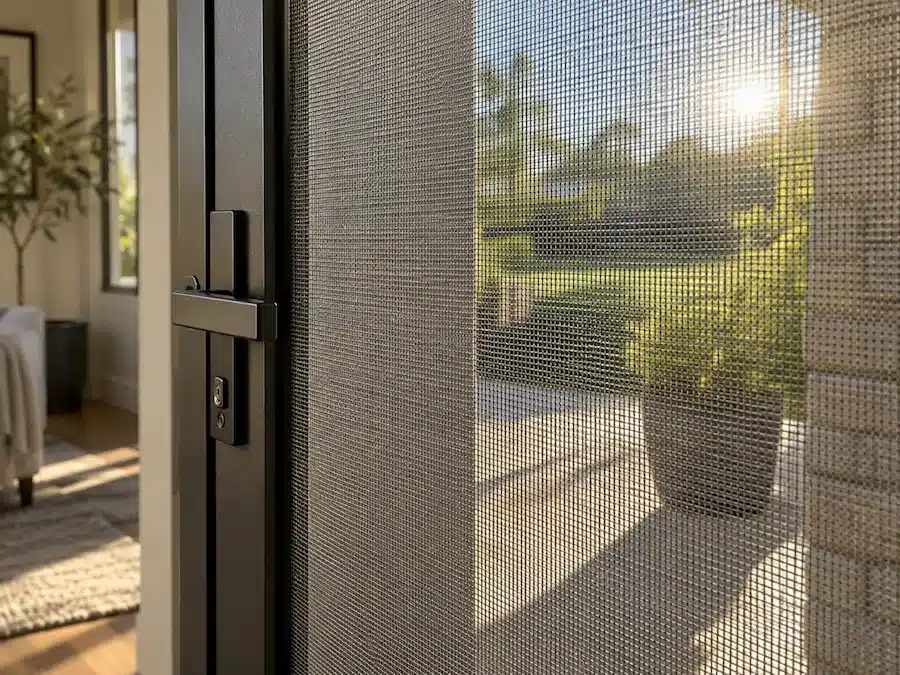
Yes. The fine mesh on a security screen shades glass and open doorways from direct sun, which reduces glare and heat buildup while still allowing airflow and visibility. Because the screen lets homeowners keep doors and windows open for natural ventilation instead of relying on solid barriers or closed blinds, many households use less air conditioning during warmer months. Security Screen Doors installs mesh security screens for Southern California homes that want stronger sun protection at doors and windows alongside better security.
Southern California homeowners deal with a lot of direct sun, and that sun does more than fade furniture and heat up a room. It also pushes air conditioning systems to work harder, which shows up on the monthly utility bill.
Security screens are usually chosen for the protection they add at doors and windows, but many homeowners are surprised to learn they also help manage sun exposure at the same time.
A fine mesh screen sits directly in the path of the sun before it reaches the glass or the open doorway behind it. That shading effect is a genuine, practical bonus on top of the security the screen already provides.
Security Screen Doors installs mesh security screens designed to hold up under Southern California sun while keeping entry points protected year-round.
Why Direct Sun Is a Bigger Problem Than It Seems
Glass doors and windows let sunlight pass through easily, which is exactly what makes them appealing for natural light. That same quality also lets solar heat build up quickly inside a room, especially on south- and west-facing openings during the afternoon.
This effect, often called solar heat gain, is one of the main reasons rooms with large glass doors or windows can feel noticeably warmer than the rest of the house.
The U.S. Department of Energy’s Energy Saver program notes that managing solar heat gain at windows and doors is one of the more effective ways to reduce cooling demand in a home.
How a Security Screen’s Mesh Provides Shade
A security screen’s mesh is made up of thousands of small, closely spaced strands. From the outside, this creates a shading layer that intercepts a portion of the direct sunlight before it ever reaches the glass or the open doorway.
The mesh reduces glare and direct heat at the opening while still allowing airflow and a clear enough view to see through comfortably. This is different from blinds or curtains, which block heat only when the door or window is fully closed.
Because the screen does its job while the door stays open, homeowners get shade and ventilation at the same time instead of choosing between them.
Keeping Doors Open Without Losing Cool Air Control
One of the more overlooked ways security screens support lower cooling costs is by making it practical to open doors and windows in the first place.
Without a secure screen, many homeowners keep sliding doors and patio entries closed for security reasons, even on mild days when natural airflow would be more comfortable and use less energy than running the air conditioner.
A properly secured sliding screen door allows that same opening to stay open safely, so homeowners can take advantage of cross-ventilation during cooler mornings and evenings instead of relying on the air conditioner around the clock.
Best Rooms and Openings to Prioritize
Not every opening in a home contributes equally to indoor heat. Homeowners typically see the most benefit from adding sun-shading security screens to:
- South- and west-facing sliding glass doors
- Patio doors that open onto sunny outdoor living areas
- French doors with large glass panels in living rooms or kitchens
- Rooms that consistently run warmer than the rest of the house
Starting with the rooms that get the most direct afternoon sun is usually the most effective place to begin.
Security Screens on Patio and Sliding Doors
Patio areas tend to see the heaviest sun exposure in a home, which makes patio door security screens a natural fit for both protection and heat management.
Homeowners who spend time in outdoor living spaces during summer months often find that a shaded, screened patio entry stays more comfortable than one left fully open to direct sun or closed off entirely.
A Practical Complement to Other Energy-Saving Habits
A security screen is not a replacement for insulation, efficient windows, or a well-maintained HVAC system. It works alongside these existing energy-saving measures as one more layer of protection against unwanted heat gain.
Homeowners who already use fans, adjust thermostats seasonally, or manage window coverings can add security screens to that same routine without changing how they already manage their home’s temperature.
What to Look for in a Sun-Friendly Security Screen
Not all mesh is built the same way, and homeowners focused on sun protection alongside security should consider:
Mesh Density and Weave
A tighter, more consistent weave generally provides more shading than a loose or widely spaced mesh, while still allowing airflow through.
Frame Placement
A screen mounted close to the glass or opening shades that surface more directly than one installed farther away.
Comfort and Protection in One Investment
Security screens are often chosen for protection first, but the sun-shading benefit is a practical reason to prioritize the upgrade sooner rather than later. Security Screen Doors helps Southern California homeowners choose mesh security screens that hold up to daily sun exposure while keeping entry points secure. Contact us today to find the right security screen for your home’s sunniest doors and windows.